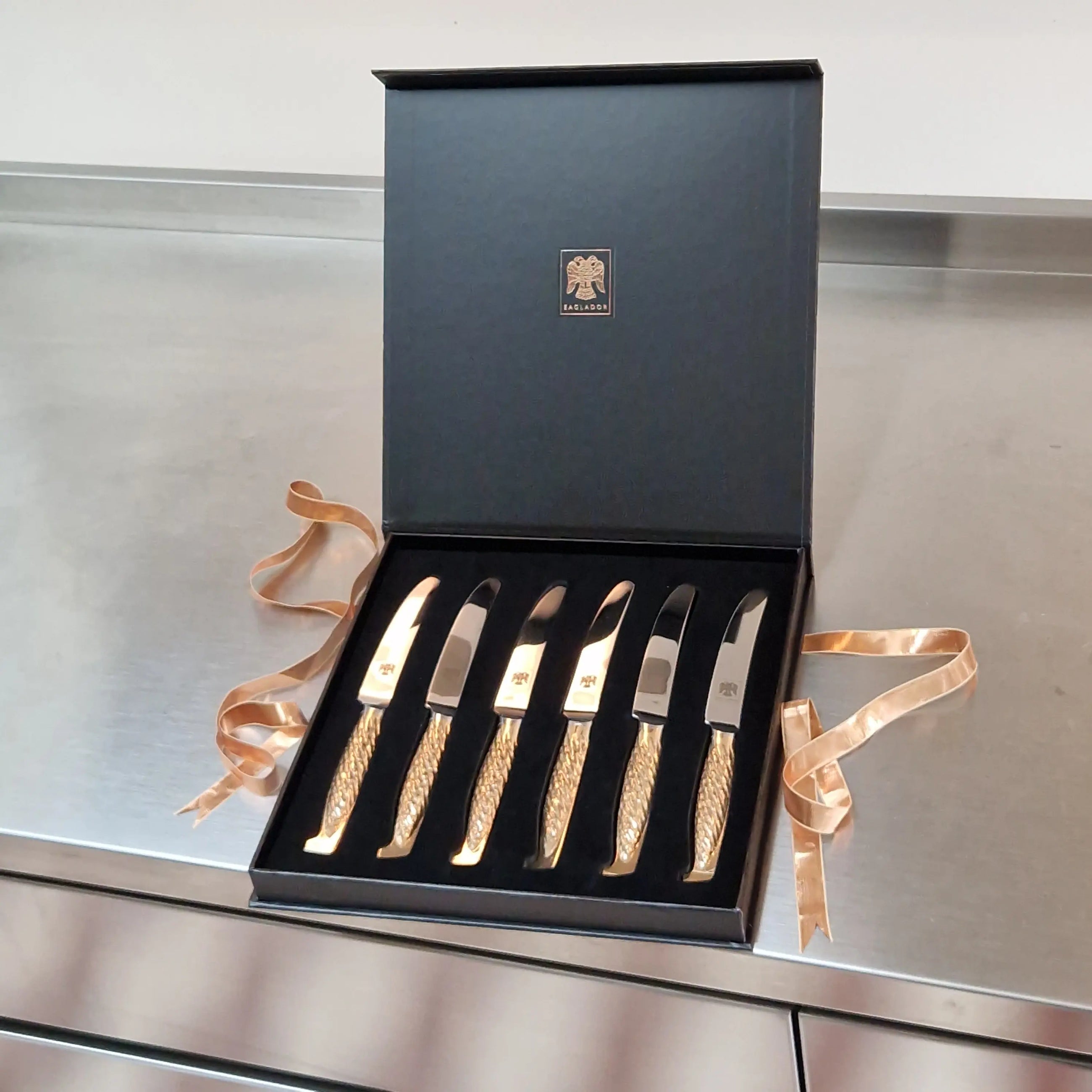
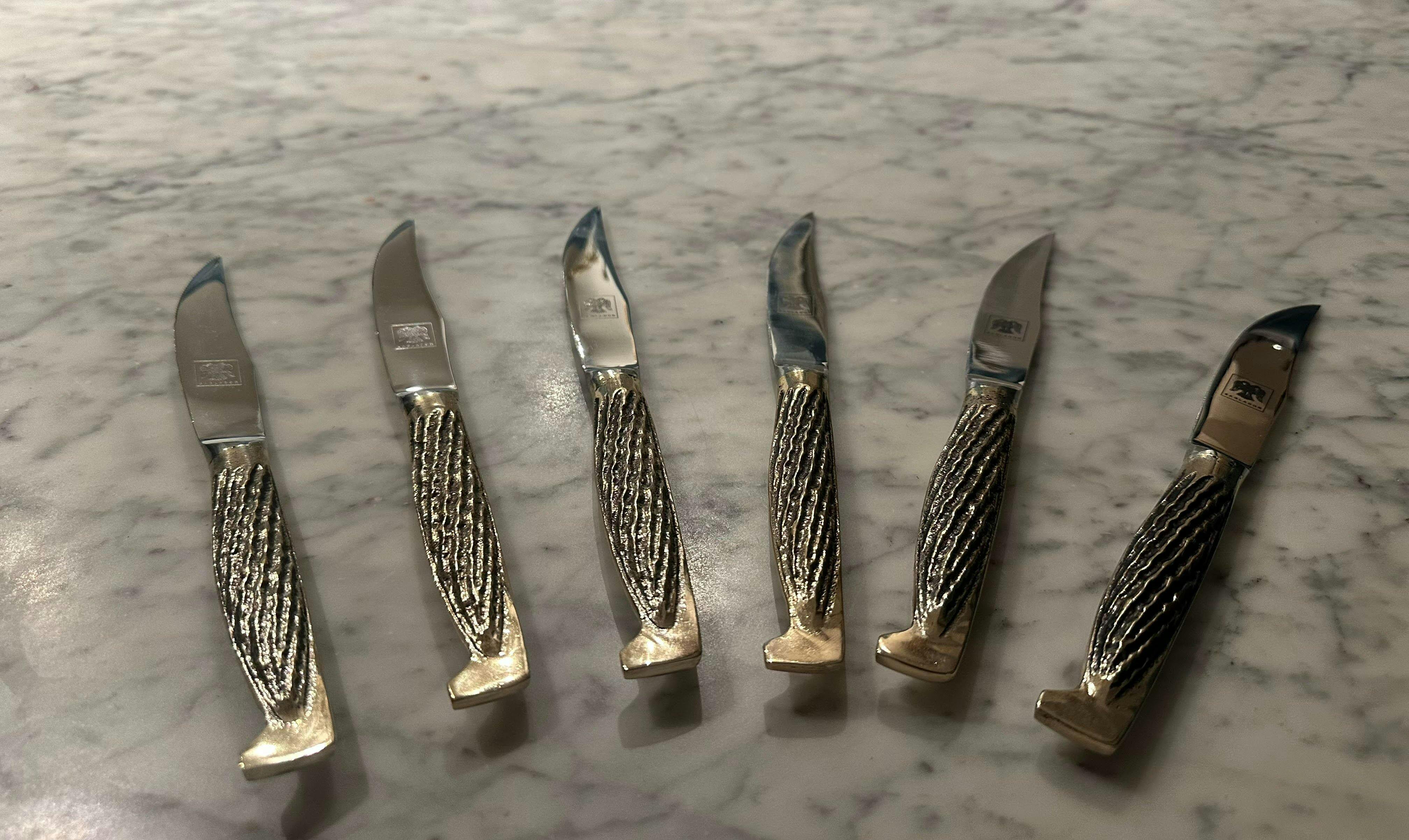
Patina on bronze, (a copper-tin alloy), refers to the natural, protective layer that forms over time through oxidation and interaction with environmental factors, heat, oils, and foods. This process enhances the material's durability, aesthetics, and functional properties and antimicrobial qualities—without the need for synthetic coatings. Unlike rust on iron, bronze patina is stable and beneficial, often developing shades from brown to green depending on conditions. Depending on how you want your cutlery to look the patina can be left to develop or polished off. The timeline can vary based on usage, environment, and care, but it generally unfolds in distinct stages.
Stage 1: Initial Formation (Days 1-7 to Weeks 1-4)
In the earliest phase, the bronze surface begins to react with oxygen, moisture, and oils from your hand. This creates a thin, foundational layer of copper and tin oxides, often appearing as subtle darkening or a slight sheen. Minor changes are visible, but the patina is fragile—frequent hand-washing and oiling help accelerate it. If you are seeking to develop the patina, avoid harsh cleaners or dishwashers here to prevent stripping the base layer.
Stage 2: Early Development (Weeks 4-12 to 6 Months-2 Years)
As exposure continues, the patina deepens with polymerized oils, sulphides, and further oxidation, forming a more resilient coating. Colours shift to warmer browns or subtle greens, and the surface smooths out. Antimicrobial benefits emerge stronger due to copper ions, reducing bacterial growth. Environmental factors play a big role—humid or high-use kitchens speed this up, while dry conditions slow it.
Stage 3: Mature Patina (6+ Months to 2+ Years and Beyond)
The patina reaches full maturity as a self-repairing, stable barrier—thick, even, and highly protective. It achieves peak antimicrobial mastery, superior durability. Visually, it may stabilize into rich, varied tones (e.g., deep bronze or Verdigris hints), turning the piece into a unique heirloom. For bronze utensils, this stage minimizes maintenance needs, with the layer naturally regenerating through use.
To encourage healthy patina hand-wash gently. If you prefer a polished look, you can buff it back, but embracing the patina unlocks its full luxury aesthetic.